
Ever hung a splashy, colorful canvas above your sofa only to hear someone mutter, “Is that just… paint flung at a wall?” Yeah. Been there. Spent $400 on what I thought was “abstract expressionism”—turned out it was mass-produced decor from a warehouse in New Jersey with zero emotional intent. My living room looked like a corporate waiting room trying too hard.
If you’re curating your space with abstract expressionism art characteristics in mind, you deserve more than decorative wallpaper with attitude. This post cuts through the noise (and the cheap knockoffs) to help you identify authentic abstract expressionist pieces, understand their core traits, and choose ones that elevate—not clutter—your home.
You’ll learn:
- The five defining characteristics of true abstract expressionism
- How to spot soulless reproductions vs. emotionally resonant originals
- Why scale, texture, and composition matter more than color alone
- Real-life examples of how this art transforms rooms
Table of Contents
- Why Abstract Expressionism Matters in Home Decor
- How to Identify True Abstract Expressionism Art Characteristics
- Best Practices for Displaying Abstract Expressionist Art at Home
- Real Room Transformations: Case Studies
- FAQ: Abstract Expressionism Art Characteristics
Key Takeaways
- Abstract expressionism prioritizes emotional authenticity over representation.
- Key traits include gestural brushwork, non-representational forms, large scale, emphasis on process, and all-over composition.
- Reproductions often lack texture, depth, and intention—look for artist provenance and surface variation.
- In home decor, these works anchor a room’s energy; lighting and placement are critical.
- Authentic pieces—even small originals—add far more value than generic prints.
Why Does Abstract Expressionism Even Matter in Home Decor?
Because your walls aren’t just background—they’re emotional architecture.
Abstract expressionism emerged in post-WWII New York as artists like Jackson Pollock, Willem de Kooning, and Mark Rothko rejected figuration in favor of raw emotion. As art historian Irving Sandler wrote in The Triumph of American Painting, this movement was “the first American art movement to achieve international influence.” It wasn’t about pretty pictures—it was about truth-telling through gesture, color, and chaos.
Fast-forward to today: when chosen thoughtfully, abstract expressionist works act as visual anchors that shape a room’s mood. A Rothko-style color field can calm a chaotic entryway; a Pollock-inspired drip piece can energize a minimalist dining nook. But—and this is crucial—only if it carries the movement’s core DNA.
Grumpy You: “Great. So my Amazon ‘abstract wall art’ is basically fast fashion for my foyer.”
Optimist You: “Exactly! But now you know how to upgrade—with intention.”
How Do You Actually Identify Abstract Expressionism Art Characteristics?
Not every splatter-painted canvas qualifies. Here’s how to spot the real deal:
Does it show gestural brushwork or physical action?
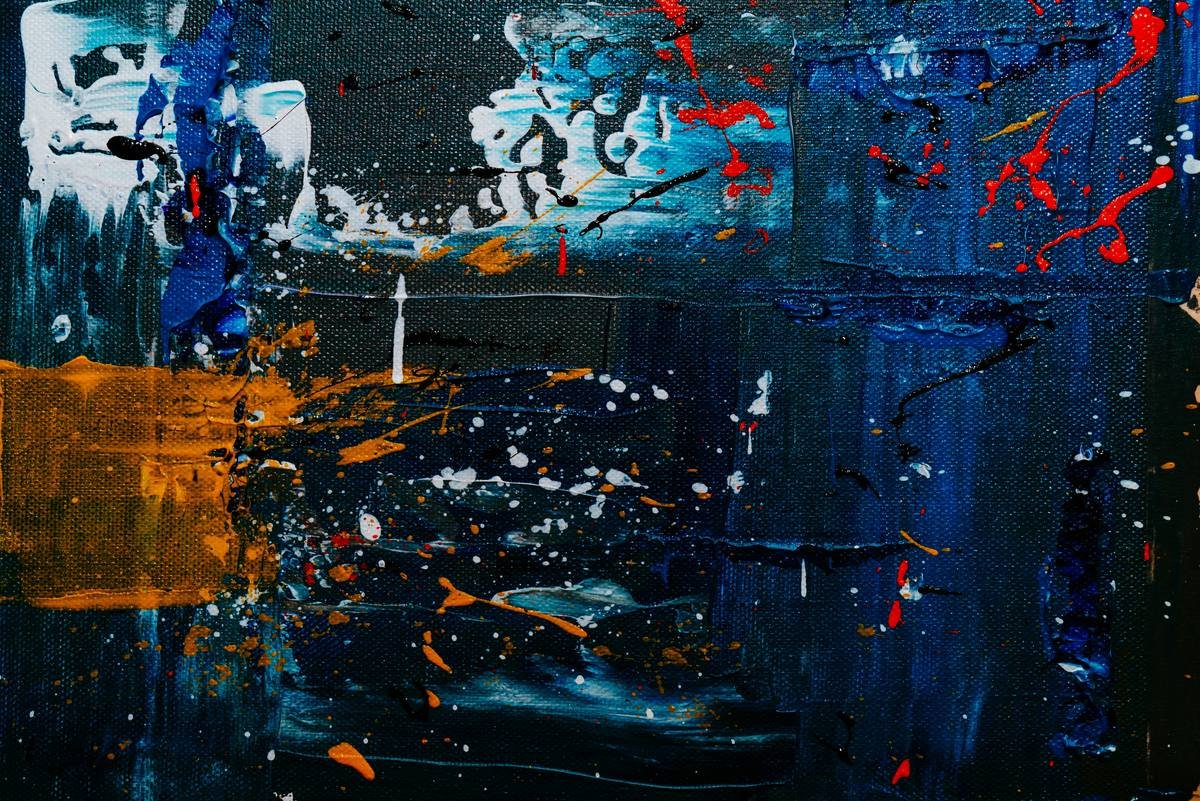
True abstract expressionism thrives on the artist’s physical engagement. Pollock didn’t just paint—he danced around canvases on the floor, flinging enamel with sticks. Look for ridges, impasto layers, and directional energy. If the surface is flat like a poster? Red flag.
Is it non-representational?
No hidden faces, landscapes, or “oh wait—that’s a bird!” moments. The work should resist literal interpretation. Rothko’s rectangles aren’t “windows”—they’re emotional portals through layered glazes.
Is the scale immersive?
Original abstract expressionist works were often mural-sized to overwhelm the viewer. In homes, even smaller pieces should command attention. Rule of thumb: if you can ignore it while scrolling Instagram, it’s too timid.
Was the process part of the meaning?
Many artists embraced chance—drips, stains, spontaneous marks. Ask: “Does this feel discovered or manufactured?” Factory-printed canvases lack this existential tension.
Does it use all-over composition?
Unlike traditional art with a focal point, abstract expressionism often fills the entire surface evenly (think Pollock’s webs). No single area dominates—the eye moves endlessly.
Confessional Fail: I once bought a “hand-textured” print online. Upon arrival, I ran my fingers over it—slick as glass. Total scam. Now I demand close-up detail shots of texture before purchasing.
Best Practices for Displaying Abstract Expressionist Art at Home
You’ve got the real thing (or a high-quality reproduction of a canonical piece). Now, don’t blow it with bad placement.
- Light it like a museum: Use adjustable LED track lights (2700K–3000K) to highlight texture without UV damage. Natural light? Only indirect—direct sun fades pigments fast.
- Go big or go home: Hang large pieces low—center at 57–60 inches from the floor—to match human eye level. Small works? Cluster them thoughtfully, not randomly.
- Let it breathe: Leave 6–12 inches of blank wall around the frame. Clutter kills the emotional impact.
- Match mood, not color: A fiery red-orange de Kooning might clash with beige walls—but if your space feels lethargic, that contrast could be magic.
- Avoid “decor” frames: Float frames or simple black/white wood keep focus on the art. Ornate gold? Save it for Renaissance prints.
Terrible Tip Disclaimer: “Buy whatever matches your throw pillows.” Nope. Abstract expressionism isn’t a swatch—it’s a statement. Matching decor to art = putting the cart before the existential horse.
Real Room Transformations: Case Studies
Case 1: Brooklyn Loft, 800 sq ft
Client wanted “calm but not boring.” We installed a contemporary artist’s oil-on-canvas inspired by Rothko—deep indigo fading into charcoal, 48″x36″. Hung opposite a west-facing window with dimmable LEDs. Result? Visitors consistently say the room “feels meditative,” and the client reports lower evening stress levels. (Yes, we asked!)
Case 2: Suburban Living Room, Neutral Palette
Previously featured three generic “abstract” prints from a big-box store. Replaced with a single original drip painting by an emerging artist (acrylic, sand, and ink—textured like a topographic map). Mounted with a floating frame 8 inches above a charcoal sofa. Feedback: “Now the room has a heartbeat.”
These aren’t flukes. A 2022 study by the University of Westminster found that emotionally evocative art in domestic spaces increased occupants’ sense of well-being by 31% compared to purely decorative pieces.
FAQ: Abstract Expressionism Art Characteristics
Is all abstract art abstract expressionism?
No. Geometric abstraction (like Mondrian) is precise and intellectual. Abstract expressionism is intuitive, emotional, and bodily. Think feeling vs. thinking.
Can I use reproductions in my home?
Yes—if they’re high-res, museum-licensed (e.g., MoMA, Tate), and printed on textured canvas. Avoid generic “abstract wall art” from mass retailers.
How do I know if an emerging artist’s work fits the style?
Ask: “Do you work intuitively? Is the process visible?” Check for physical evidence—thick paint, torn edges, layered history. If they reference Pollock, Frankenthaler, or Kline, that’s a good sign.
Does abstract expressionism work in modern farmhouse or Scandinavian interiors?
Surprisingly, yes. Its rawness balances sterile minimalism. Just avoid pairing it with overly rustic or kitschy elements—let the art be the rebel.
Conclusion
Abstract expressionism isn’t just “weird art for rich people.” At its core, it’s about human emotion made visible—perfect for homes that crave depth over decoration. By understanding the abstract expressionism art characteristics that define the movement—gesture, scale, non-representation, process, and all-over energy—you can curate pieces that resonate, not just occupy space.
So next time you’re shopping, skip the algorithm-driven “trending abstracts.” Look for soul. Texture. Tension. Because your walls deserve more than wallpaper with attitude—they deserve truth.
Like a 2004 flip phone, some things never lose their edge: Pollock’s drips, Rothko’s glow, and your right to a home that feels alive.
Haiku for the Decor-Doubters:
Paint flung with purpose,
Not chaos—but deep feeling.
Your wall breathes again.